

Say Cheese
Six Month Obsession / Issue 1-1

My Current Obsession
CHEESE
VARIETY - THE SPICE OF LIFE
Welcome to my first issue. For the next six months, I will obsess over cheese. I am currently taking the Academy of Cheese courses. I will take you with me on my cheese journey. My goal is to make cheese interesting. Some weeks will be full meals, some will be quick bites — but every Tuesday, expect something worth talking about at dinner.
THIS WEEK’S MUST TRY
I was recently in Zurich, Switzerland, and was thrilled to find that the hotel offered a variety of cheeses at the breakfast buffet. As I walked in, I was engulfed in the smells of cheese and fresh bread. Since many places in Europe use espresso machines, the room wasn’t dominated by the smell of coffee, as I find in the United States. Don’t get me wrong, the smell of coffee is also good; it was just nice to have a change.
Every night before I fell asleep, all I could think about was the next morning’s breakfast. I still think about. I was inspired to recreate the experience at home.
On a recent morning, I put some Schnebelhorn cheese on a slice of Ken’s artisan, crusty sourdough bread, and it was delicious. The first bite was nutty and just the right amount of saltiness. It took me back to Switzerland.
CHEESE: Schnebelhorn
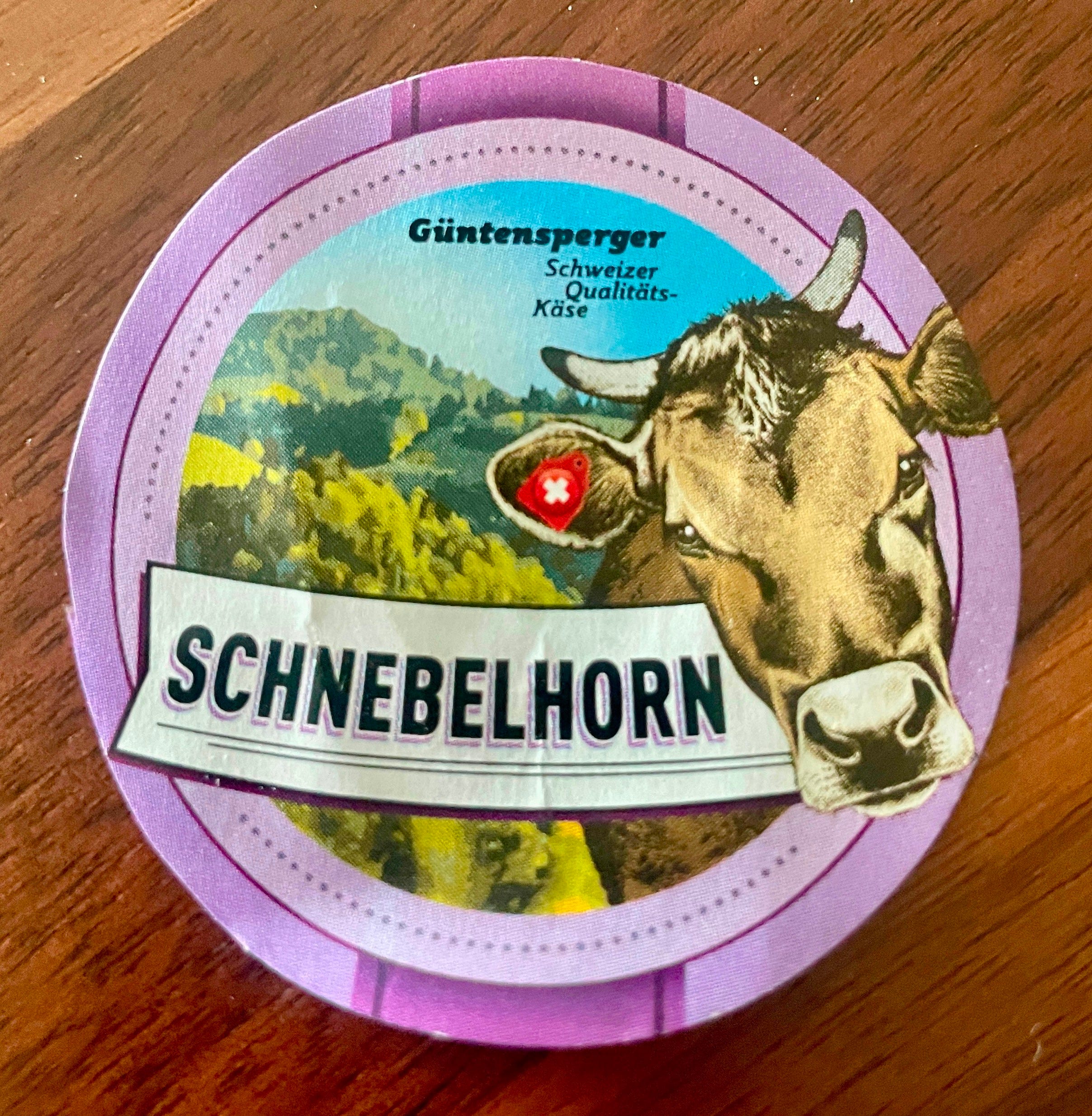
Pronunciation: Schneb-el-horn
Origin: Canton of St. Gallen, Toggenburg region, Eastern Switzerland
Style: Cooked/pressed. Alpine cream enriched
Milk: Raw cow’s milk — Brown Swiss and Braunvieh breeds, 50 contributing high-altitude herds
Age: 8-10 months
Rind: Washed
Awards: World Cheese Awards Gold 2023, Bronze 2024
Pairings:
Wine: Chardonnay, Pinot Gris, Riesling, Sherry
Beer: Dark wheat beer, hoppy IPA
Food: Apples, toasted walnuts, hazelnuts, crusty sourdough, cured meats
My Pairing: Crusty Sourdough


me
WHAT I LEARNED
One area that left me curious was among Schnebelhorn's ingredients. It is made from raw cow’s milk, salt, animal rennet, and cultures. Specifically, rennet. I see that word a lot when it comes to cheese, so I decided to learn more about it.
Legend has it that rennet was first discovered 7000-8000 years ago when milk was transported in waterskins made from a ruminant’s stomach. The milk curdled, and at some point someone tasted it. Voila. Cheese.
Rennet is an enzyme that comes from the belly of a young hoofed animal (ruminant) that is still suckling its mom. Rennet causes milk to curdle in the animal’s stomach, which also makes it useful for making cheese separate into curds (solids) and whey (liquids). Additionally, it is what makes cheese delicious. As the cheese ages, the rennet continues to work, causing complex nutty flavors. It is a must for artisan cheese producers.
Let’s get the uncomfortable truth out of the way. Yes, they have to slaughter a young animal to obtain the rennet. Typically, young males are used for rennet, as they are slaughtered anyway for veal and aren’t useful for milk.
Here is how it is done…
Traditional method — stomach lining is cleaned, dried, cut into strips, soaked in salted water or whey for several days, then strained.
Modern commercial production — stomach lining is freeze-dried or processed into standardized liquid or powder form.
One calf stomach can produce enough rennet for roughly 1,000 liters of milk.
Only a few milliliters are needed per 100 liters of milk — the enzyme is incredibly potent.
There are other ways to achieve the effects of rennet, but none match animal rennet’s flavoring capabilities. Other sources of rennet include vegetables, microbes, and even snails.
Moving forward, I am going to make sure animal rennet is in it. That rhymes - haha.
*If you are a vegetarian, you should ask your cheesemonger for options. Not all ingredient labels are clear.
PARTY TRICK 🎉
Did You Know...?
Have you ever thought about why we say “cheese” when our photo is taken?
The boring answer is that the combo of the “ch” sound and the long ‘ee’ causes us to shape our lips in the shape of a smile. The fun answer is that cheese makes us smile.
Up until 1940, we said “prunes” because it caused a more dignified look. Cheese was first recorded in 1943 when The Big Spring Herald in Texas referenced it.
Joke (that I wrote)
Knock knock.
Who’s there?
Curds and whey.
Curds and whey who?
Don’t weigh me, I eat too much cheese.
THIS WEEK'S OBSESSION LIST
🔍 Try this: Eat cheese for breakfast
📚 Read this: A Reader’s Digest article on: Why we say cheese - Click Here
🎯 Next week: Something World Cup worthy
💬 Your turn: What is your favorite cheese? (Please share in the comments)
Variety is the spice of life — see you next Tuesday.
— Ward